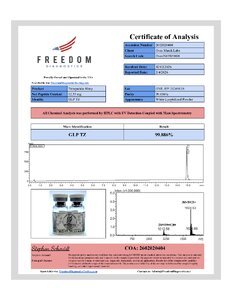
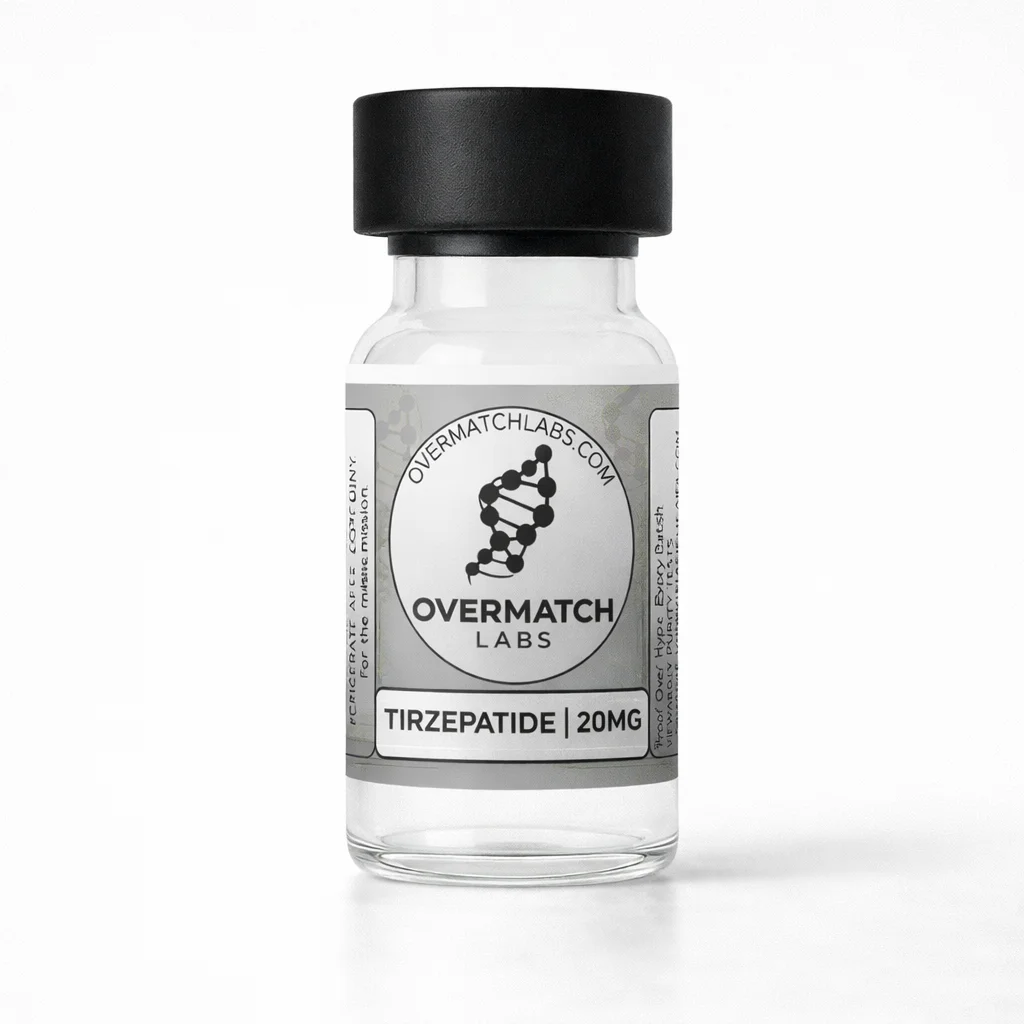

Overmatch Labs does not sell any compound or peptide that has not passed independent third-party laboratory testing at 99%+ purity. Every batch is tested by an accredited third-party laboratory — not our own facility — to ensure unbiased verification of identity, purity, and endotoxin levels. We believe transparent, verifiable science is the foundation of trust.
Most incretin-based research compounds work through a single receptor. Tirzepatide works through two. This 39 amino acid synthetic polypeptide activates both the glucose-dependent insulinotropic polypeptide receptor and the glucagon-like peptide-1 receptor simultaneously, two distinct arms of the incretin signalling system that when engaged together produce metabolic effects that neither achieves on its own. Originally developed by Eli Lilly and Company and approved by the FDA for type 2 diabetes in May 2022 and for weight management in November 2023, Tirzepatide has been the subject of some of the most consequential metabolic clinical trials of the past decade. For researchers studying glycemic regulation, obesity, cardiovascular risk, and the biology of incretin signalling, it is the most comprehensively studied dual agonist compound currently available.
Why Dual Agonism Matters
GLP-1 receptor activation drives glucose-dependent insulin secretion from pancreatic beta cells and sends appetite-regulating signals to the hypothalamus. These are well-established mechanisms. What GLP-1 receptor agonism alone cannot reach is the GIP receptor population expressed in adipose tissue and regions of the central nervous system at densities that GLP-1 receptors simply do not match. GIP receptor activation adds direct metabolic signalling in fat tissue and engages energy balance control points that selective GLP-1 compounds leave completely untouched.
The result is not just additive. Preclinical data has shown that simultaneous activation of both receptor systems produces amplified insulinotropic responses, more comprehensive effects on glucagon regulation, and body composition outcomes that consistently exceed what either pathway delivers independently. That is the research case for dual agonism, and it is what separates Tirzepatide from every GLP-1 only compound in the space.
Detailed purity verification and batch analysis results
Tirzepatide 10mg, 20mg, 30mg, 50mg, and 60mg are in stock and ship same day on eligible orders. Every batch is independently third party tested to a minimum of 99% purity and a Certificate of Analysis is available directly on this page before purchasing.
Tirzepatide 40mg is available via special order. Once your order is placed, the compound is sourced directly from our supplier, independently tested by our third party laboratory, and shipped to you with a full Certificate of Analysis confirming compound identity and purity. Please allow a minimum of 2 to 3 weeks for delivery. All sizes meet the same purity standard before leaving our facility.
Scientific research related to this compound
Citations and reference materials
How this compound works at a biological level
In published research, Tirzepatide has been investigated for mechanisms including: Tirzepatide is a dual-acting peptide that activates both GIP (glucose-dependent insulinotropic polypeptide), GLP-1 (glucagon-like peptide-1) receptors. This dual action is studied for effects on insulin secretion, slows gastric emptying. Mechanistic descriptions reflect findings in laboratory and animal-model research only.
Specifications, properties, and technical data